
You’ve Been Taught the Wrong Things About Marriage Your Whole Life

Marriage advice has a funny way of sticking in our heads.
It loops like a song you never asked Spotify to play - over and over again. Maybe you first heard it in a magazine article from years ago. Or from a well-meaning relative who’s been married “forever” (and wants you to know it). Maybe it came from your parents, a therapist, a pastor, or that celebrity couple whose couple goals interview still lives rent-free in your brain.
You know the lines. They’re short. Catchy. Easy to repeat. And somehow… they’re supposed to be the secret to a happy marriage.

Here’s the uncomfortable truth:
Most of the popular marriage advice you’ve heard your entire life isn’t actually helping you when you need it most.
In fact, some of it may be quietly working against you.
Today, we’re going to walk straight through the greatest hits of marriage advice, the phrases everyone repeats when asked that magical question:
“So what’s your secret?”
We’ll talk about why these tips sound right, why they often fall flat in real life, and what’s missing when you try to apply them to your very real, very complex marriage.
And no - the answer is not “try harder” or “communicate better.” (If it were that simple, none of us would be here.)
As someone who’s been married for 56 years and gets asked this question almost daily, I can tell you something with confidence: the real answers are rarely what people expect. And they’re almost never as complicated as modern marriage advice makes them out to be.

My husband, Bob and I shortly after our wedding in 1969
To be fair, most people who share their “magic formula” for a lasting marriage aren’t wrong. Not entirely. The problem is this: they usually don’t know how to explain how that advice actually works - or how to apply it to two very different people, with very different personalities, expectations, and emotional wiring, are involved.
Because here’s the inconvenient reality no one likes to admit:
We are not all the same. And marriage advice that ignores that fact tends to fall apart under pressure.
So let’s begin with one of my all-time favorite quotes about marriage.
And by “favorite,” I mean the one that makes me smile politely… and then sigh internally.
You’ve definitely heard it before.

1.“Happy Wife, Happy Life!”
We’ve all heard the phrase “Happy wife, happy life.” It’s usually delivered with a chuckle, a nudge to the ribs, and the unspoken implication that every married man should probably just nod and agree.
It’s meant to be lighthearted. Even affectionate. But beneath the humor is a message that quietly reshapes the entire dynamic of a marriage.
And not in a good way.
Why It Sounds So Good
Let’s give credit where credit is due, this phrase became popular for a reason.
It sounds playful and loving
It acknowledges that women have emotional influence
It feels validating to wives
It gives husbands a “simple” rule to follow
And my personal favorite: it fits perfectly into our culture’s beloved feminist humor, where men are gently (and sometimes not-so-gently) put down, all while everyone laughs and calls it empowerment.
On the surface, it feels harmless. But what sounds cute at a dinner party often collapses in real marriage.
What It Actually Teaches
When you strip the joke away, the message becomes clear:
A husband’s job is to manage his wife’s happiness
Her moods become the emotional thermostat of the home
Peace comes from appeasement, not partnership
Discomfort must be avoided at all costs
In other words, harmony is achieved by walking on eggshells, and no marriage thrives that way.
How to Rethink This for Your Marriage
A woman’s happiness is not something a man can manufacture. And a marriage is not strengthened by one person constantly adjusting themselves to keep the other content.
Real closeness grows from something far more powerful:
A woman’s natural femininity sets the tone
Her warmth inspires love and harmony rather than demands it
Her self-responsibility creates stability and respect
Her mastery of grace elevates every relationship around her, not just her marriage
This isn’t about suppressing emotions or pretending everything is fine. It’s about learning to master feelings rather than be ruled by them.
Because here’s the truth no slogan can capture:
Marriage feels lighter when happiness isn’t something one person must secure for the other.
And ironically, that’s when both people tend to be happier.

2. “In Healthy Marriages, Communication is KEY”
Sounds obvious, right? Who would argue with “communicate”?
Why It Sounds So Good
Because it sounds mature, responsible, and emotionally intelligent. “Communication” feels like the grown-up answer, the one no one can really argue with. It gives couples hope that if they can just talk more, explain better, or find the right words, everything will finally click. It also feels fair and balanced, placing responsibility on both people equally and promising clarity if everyone just speaks up.
And honestly? It’s comforting. It suggests that problems aren’t about deep differences, emotional wounds, or personal growth, they’re just about words. Fix the words, fix the marriage. Simple. Clean. Reassuring.
What It Actually Teaches
Here’s the secret most people miss: it’s rarely lack of communication that hurts a marriage. It’s bad communication - rushed, sharp, emotionally loaded, or unsafe words that chip away at the relationship you’ve worked so hard to grow.
Respect and honesty matter so much more than simply talking to each other. Ask yourself: Is respect showing up in my words? Am I hiding things? Tiptoeing around? Yelling or snapping? Or the worst of all, “am I accidentally manipulating with my words?”
Then there’s your TONE. You know the common tagline: “Most of what you’re saying isn’t actually about the words coming out of your mouth”? Fascinating Womanhood couldn’t agree more. Your tone is almost always more important than the actual words you choose. When your tone screams louder than your words, you’re not really communicating - you’re sending a different, unintended message.
How to Rethink This for Your Marriage
When communicating, focus on the:
Tone – gentle, inviting, calm, no matter what topic!
Timing – choosing the right moment, even if it means waiting
Emotional temperature – keeping the conversation safe, not heated…controlled (you might have to walk away at times)
Remember: you could say all the “right” words and still create distance if your delivery feels urgent, critical, or tense.
In Fascinating Womanhood, we focus less on perfect phrasing and more on presence: showing up in a way that invites emotional closeness, knowing you can’t control his every response.
Even tiny shifts in how you communicate can transform the closeness in your marriage.
In other words, your decisions in the moment matter far more than what you say.

“But what if he doesn’t communicate?”
“Why does it feel like I’m doing all the work?”
“When is he finally going to step up and talk about things?”
These questions are understandable, and very common. But here’s the gentle truth: he will never communicate exactly the way you do. And he isn’t meant to.
Waiting for a man to express himself like a woman is a long wait, and usually a frustrating one. But our differences as people are positive for our relationships - life wouldn’t work if we were all the same.
If you’re married to a man who isn’t naturally verbal, it may be time to expand your definition of communication.
Men often speak fluently through actions, consistency, and presence, cues that go unnoticed when we’re only listening for words.
Start watching for these non-verbal cues instead of waiting for him to talk his heart out!
His reliability
His effort
His protection
His quiet ways of showing care
His retreat habits when he’s thinking of what to say
When you learn to read these signals, you’ll realize he’s been communicating all along, just not in the language you expected.
Consider this your advanced course in male communication. And once you master it, you may find yourself not only more at peace… but quietly proud of the skill you’ve added to your male understanding library.

3. “Never Go to Bed Angry”
You know you’ve heard it - everyone says this!
Why It Sounds So Good
This advice sounds responsible. Mature. Even virtuous. I’ll never forget my wedding day - someone told me to do this as a “guarantee” for a happy marriage. I’ll also never forget the day I completely abandoned this advice: my husband fell asleep (followed by loud snoring) while I was trying to resolve something we disagreed on that day. Clearly, it doesn’t always work!
Emotional maturity, however, doesn’t always mean resolving everything immediately. Even when you’re frustrated, it’s important to accept that he might need time to think about what he wants to say. Sometimes, he might not even know how he feels yet. Most men take longer to process and figure out how to address everyday disagreements with the women they love.
What It Actually Teaches
When we demand resolution on our timeline, we can unintentionally push men away emotionally rather than draw them closer.
There are moments when choosing rest over resolution is not avoidance, it’s wisdom. A woman who feels secure doesn’t panic over temporary tension. As difficult as it may sound, she trusts the relationship enough to let emotions settle before continuing the conversation.
How to Rethink This for Your Marriage
In Fascinating Womanhood, patience isn’t avoidance, it’s strength. As women, we must practice:
Faith in love
Emotional steadiness
Non-reactivity
Forcing closure late at night often creates more damage than distance ever would. Think of it like poking a grumpy bear in it’s cave…the problem often cannot be solved when he’s in that space. Clarity usually comes after calm- not before sleep deprivation!

4. “Never Stop Dating Your Spouse”
I actually do think this is a marriage saving piece of advice - I have always had a Friday night standing date night with my husband of 56 years and highly recommend couples following this advice. Find ways to have some fun together - that’s the whole point.
Why It Sounds So Good
This advice sounds romantic, hopeful, and doable. It suggests that love can be kept alive through intention, effort, and shared experiences. Dating represents choice, I’m still choosing you! It reassures couples that marriage doesn’t have to mean boredom, routine, or emotional distance.
It also feels practical. Put it on the calendar, show up, and you’ve “done something” for your marriage. For many couples, especially in busy seasons of life, that structure feels like a lifeline.
But this isn’t what you think it is. You can’t book the table, get dolled up for a date and call it a win. Your date night has to be a relationship building activity. It has to be pleasant!
What It Actually Teaches
When misunderstood, this advice quietly teaches couples to focus on doing instead of being. It can create the illusion that romance comes from effort, planning, or novelty, when in reality, it comes from emotional ease.
It’s not about scheduling more date nights. It’s about creating an atmosphere that invites a man to draw closer. When a date turns into a discussion about finances, a replay of everything that’s going wrong, or a dumping ground for complaints about life, the purpose of the evening disappears. At that point, you’re not building romance, you’re eroding it.
You can sit across from each other at a beautiful candlelit restaurant and still feel miles apart
A date night should feel like a place of rest, warmth, and enjoyment, not another problem-solving session.It’s not about scheduling more date nights. It’s about creating an atmosphere that invites a man to draw closer. When a date turns into a discussion about finances, a replay of everything that’s going wrong, or a dumping ground for complaints about life, the purpose of the evening disappears. At that point, you’re not building romance, you’re eroding it. A date night should feel like a place of rest, warmth, and enjoyment, not another problem-solving session.
How to Rethink This for Your Marriage
Instead of asking, “What should we do together?” ask,
“What positive and fun energy am I bringing into our time together?”
Closeness isn’t created by activities…it’s created by atmosphere. Fascinating Womanhood teaches that intimacy grows when a woman brings:
Her natural Femininity
Her positive outlook
Her emotional sensitivity
Remember: atmosphere matters more than agenda. The goal isn’t to impress, it’s to grow your intimacy and relationship.
When the energy is warm, playful, and receptive - romance follows! Whether you’re out to dinner or taking out the trash, it doesn’t matter where you go. Make the date a time you are together and enjoying one another’s company.

5. “Put Sex on the Calendar!”
Romance…some think it will eventually die. Others think it has to be “scheduled.” But what about the alternative: growing and sustaining what you already have? Romance doesn’t grow from checklists or calendar reminders. It grows in a space where a man feels respected and a woman feels cherished. Yet modern advice often turns intimacy into a project: schedule it, fix it, spark it, revive it.
Why it sounds good
On the surface, scheduling intimacy seems practical. Life is busy, and putting sex on the calendar promises that it won’t get lost in the shuffle. It feels like a proactive, responsible way to “maintain” your relationship.
What it actually teaches
In reality, this approach turns intimacy into a task or obligation. It suggests that closeness is something you have to force, plan, or manufacture, which can create pressure, reduce desire, and make romance feel like a chore rather than a joyful connection.
How to rethink this for your marriage:
In Fascinating Womanhood, intimacy rests on a gentler, more powerful foundation:
Constant admiration – genuinely expressing value for who he is, just as he is (remember when you were dating?).
Appreciation – showing gratitude for him being in your life without keeping score.
A solid foundation of trust – allowing closeness to unfold naturally, without control or fear.
When a woman leads with appreciation instead of pressure, intimacy strengthens. It stops feeling like another responsibility and starts feeling like a natural response to harmony. Closeness doesn’t come from trying harder. It comes from creating an atmosphere where love feels easy to return.
6. “Choose Your Battles Wisely”
Every relationship is filled with tiny moments that could become confrontations: the way he loads the dishwasher, the comment he didn’t phrase quite right, the thing he forgot (again). None of these moments are neutral. Each one presents a quiet choice: Will I correct, or will I allow?
Why it sounds good
“Choose your battles wisely” seems practical and mature. It promises a way to maintain peace without compromising your standards, making you feel like you’re handling conflict responsibly.
What it actually teaches
In reality, if misunderstood, it can sound dismissive, like letting something go means you’re weak, avoiding conflict, or suppressing your feelings. True discernment goes deeper: it’s not about ignoring problems, it’s about understanding which issues truly need attention and which can be released for the sake of harmony.
“Choose your battles wisely” is an act of strategy and grace. Popular culture actually gets this: think of the women men describe as “easy to be around” in movies and TV, not because they never speak up, but because they don’t turn every interaction into a performance review. Contrast that with the nagging-wife trope, played for laughs but rooted in a real emotional truth: constant criticism doesn’t create improvement; it creates withdrawal.
How to rethink this for your marriage
Fascinating Womanhood teaches that harmony grows when a man feels respected, not managed. When criticism becomes a habit, even small, well-intended corrections…it slowly erodes goodwill. A man begins to brace himself, not lean in.
This doesn’t mean ignoring real issues or silencing yourself. It means understanding that not every irritation deserves center stage. Some things truly aren’t battles at all, they’re preferences, moods, or passing moments that don’t need to be fixed. Sometimes the wisest battle is the one you lovingly choose not to fight.
Here’s the truth we rarely say out loud: Every correction teaches a man how closely he’s being evaluated. Every moment of grace teaches him that he’s accepted. When a woman leads with discernment, respect, and grace, she creates an environment where connection grows naturally, and harmony becomes a choice, not a compromise.
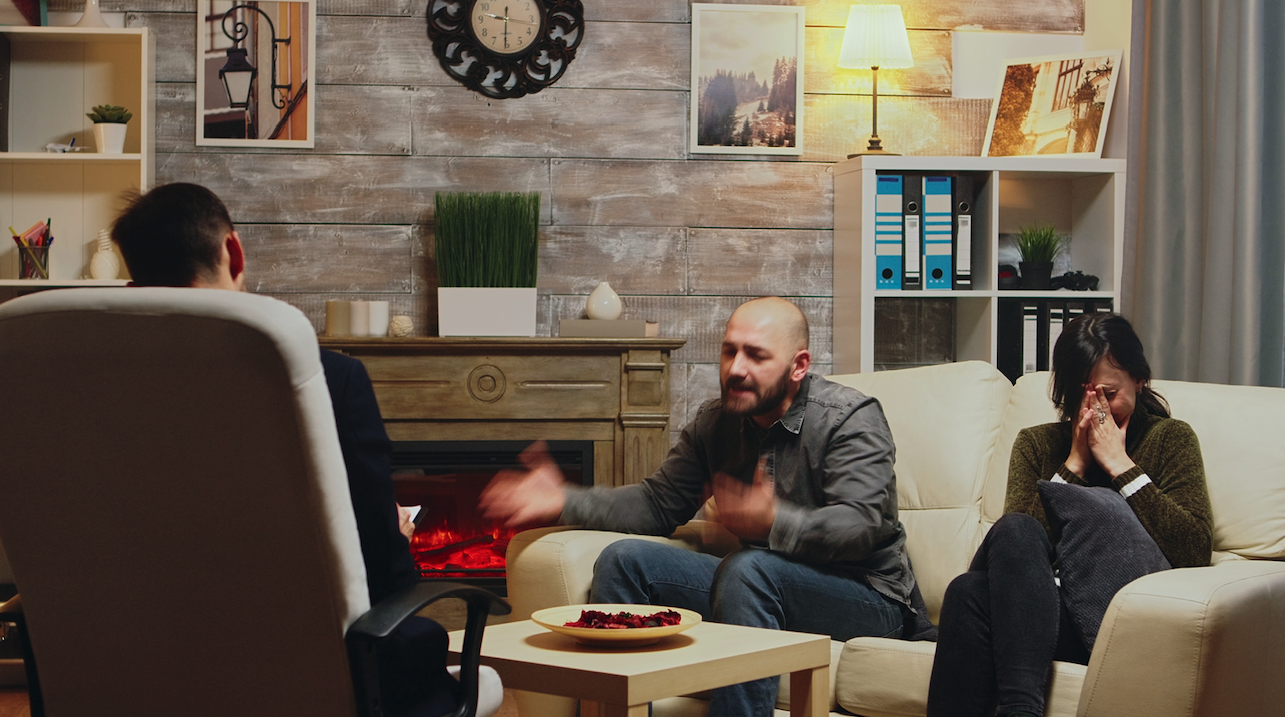
7. “Just Go to Therapy”
This phrase carries urgency, and for good reason. Therapy can be incredibly helpful. A neutral third party can help you see patterns that are hard to recognize on your own.
Why it sounds good
“Just go to therapy” seems like a practical, responsible solution. It promises guidance, tools, and an expert perspective, giving the impression that problems can be solved quickly and efficiently.
What it actually teaches
In reality, it can unintentionally shift responsibility away from yourself. It suggests that change mostly comes from external advice, rather than from your own choices and behavior. If you expect a therapist to do most of the work, or if they have different values on marriage, religion, or life priorities, you could end up frustrated, or even in a marriage worse off than where you started. Many marriages don’t need more diagnosing, they need more investment in character growth, patience, and respect.
Modern culture often treats marriage as a problem to be solved rather than a relationship to be lived.
Sessions are scheduled. Tools are learned. Vocabulary improves. And yet, between appointments, the same tone returns, the same sharpness, the same emotional habits.
How to rethink this for your marriage
Fascinating Womanhood doesn’t reject help; it reframes where true change begins. Not in labeling the relationship, but in taking personal responsibility for your own emotional presence. Not in fixing your partner, but in growing yourself.
Instead of jumping to therapy right away, center on:
Personal responsibility - choosing your behavior regardless of his.
Inner growth - cultivating calm, warmth, and maturity.
Everyday behavior over diagnosis - focusing on how you show up when no one is watching.
Real transformation isn’t loud or dramatic. It happens in ordinary moments: the way you respond instead of react, the way you speak when you’re tired, the grace you offer when it would be easier to criticize. Therapy can open the door. But it’s daily emotional practice that keeps the marriage alive.
If you’ve made it this far, congratulations - you’ve officially unlearned more marriage advice in one sitting than most people question in a lifetime.
The truth is, lasting marriages aren’t built on catchy phrases, perfect communication, or heroic effort. They’re built on understanding who you are, how you naturally influence the atmosphere of your home, and how small, daily choices shape love over time.
And here’s the good news: you don’t have to figure this out alone, or keep replaying advice that’s never quite worked. If this article resonated, the next step isn’t to “try harder,” it’s to go deeper. Book a personal coaching appointment with one of our Fascinating Womanhood coaches to get guidance tailored to you and your marriage, not a slogan.
And for ongoing insight, encouragement, and a few well-timed laughs, join us on our YouTube channel, where we unpack real marriage dynamics without the fluff. Your marriage doesn’t need another cliché. It needs clarity, grace, and a little feminine wisdom applied on purpose.
